
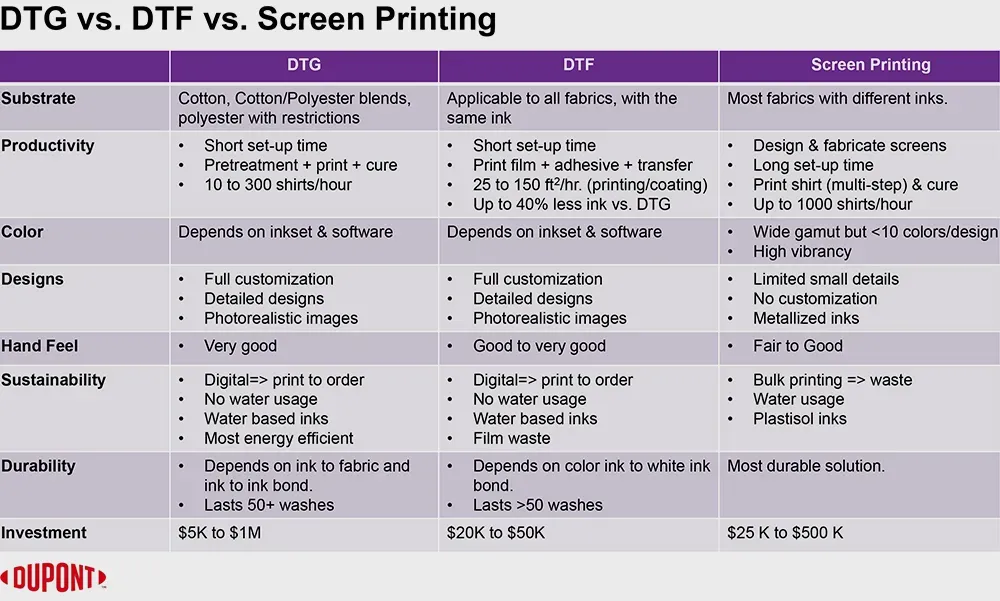
Comparing DTF vs. Screen Printing reveals essential insights for anyone looking to optimize their custom t-shirt printing processes. Both Direct to Film (DTF) and Screen Printing bring unique advantages and disadvantages that can significantly influence your business decisions. DTF printing showcases advantages such as detailed designs and vibrant color reproduction, making it ideal for smaller or custom orders. Meanwhile, screen printing offers benefits in terms of durability and cost-effectiveness for large production runs, which can be attractive for businesses focusing on volume. By diving deeper into the costs and specific capabilities of each method, you can better understand which option aligns with your printing needs and budget.
When examining the debate between DTF printing and traditional screen printing, it's crucial to understand how these two apparel printing techniques differ fundamentally. DTF, or Direct to Film printing, is a modern innovation, allowing for intricate designs and brilliant colors to be transferred onto fabrics effectively, particularly suited to small-batch needs. In contrast, screen printing, a time-honored approach, excels at creating durable prints for bulk orders, making it a staple in the printing industry. By exploring these distinct printing methods, businesses can identify the perfect fit for their specific project requirements while maximizing quality and efficiency.
Understanding DTF Printing Advantages
Direct to Film (DTF) printing brings several advantages to the table, especially for small businesses and startups looking to enter the custom t-shirt market. One of the primary benefits of DTF is its capability to produce high-quality prints with vibrant colors and extraordinary detail. This method is particularly useful for designs that incorporate a wide spectrum of colors or intricate patterns, making it a favorite for graphic artists and designers. Additionally, DTF printing does not require the extensive setup of screens like traditional screen printing, which significantly reduces the time and labor costs associated with the initial preparation.
Another notable advantage of DTF is its scalability, allowing businesses to efficiently handle both small and medium-sized orders without excessive costs. The process is straightforward; once the design is printed on the film, it can be transferred to various fabrics using heat, making it versatile for different products beyond t-shirts, such as hoodies, tote bags, and more. This adaptability not only appeals to print shops but also opens doors for creative opportunities in product offerings.
Exploring Screen Printing Benefits
Screen printing has established itself as a reliable method for custom t-shirt printing, with a long history of success within the industry. One of the major benefits of this technique is its durability. The inks used in screen printing penetrate the fabric rather than sitting on the surface. As a result, screen-printed designs withstand multiple washes and wear, making it an excellent choice for products that need to endure high-quality standards.
Moreover, screen printing is highly efficient for large production runs. The setup process may require a significant upfront commitment in terms of time and resources, but once the screens are made, the printing process can produce hundreds of shirts per hour. This efficiency leads to lower costs per unit for bulk orders, making screen printing particularly appealing for businesses planning to market large quantities of the same design.
DTF vs Screen Printing Cost Analysis
When comparing the costs associated with DTF printing and screen printing, several factors come into play that can impact your decision. DTF typically requires lower initial investment costs compared to screen printing, as it eliminates the need for multiple screens which can drive expenses up. For small businesses or startups, this affordability allows them to experiment with diverse designs and small batch sizes without breaking the bank.
However, it's crucial to consider the long-term implications of the DTF vs screen printing cost comparison. While DTF may be more cost-effective for smaller runs, large-scale production becomes more economically feasible with screen printing. As the quantity increases, the cost advantages of screen printing become apparent, allowing businesses to maximize their profit margins when fulfilling larger orders.
The Versatility of Custom T-Shirt Printing
The world of custom t-shirt printing thrives on creativity and artistic expression, and both DTF and screen printing offer unique ways to achieve this. DTF printing shines in its ability to handle complex designs with many colors and intricate details without requiring separate screens for each color. This ability makes it perfect for personalized items and smaller batches, as the flexibility of DTF means that artists have the creative freedom to explore various design possibilities without significant cost constraints.
On the other hand, screen printing has its own strengths centered around solid color applications and bold designs. It excels when designs are composed of fewer colors, making it ideal for brands looking to establish a consistent and recognizable identity through their merchandise. The ability to produce vibrant, solid colors that stand the test of time on fabric further enhances its appeal for businesses focusing on mass production.
Environmental Impact of DTF and Screen Printing
As sustainable practices gain prominence in the printing industry, evaluating the environmental impact of both DTF and screen printing becomes essential. Screen printing traditionally utilizes various chemicals in the ink and cleaning processes, which can have adverse effects on the environment if not managed properly. However, advancements have led to the development of eco-friendly inks and cleaning agents that help mitigate this impact, allowing screen printers to align with sustainability goals.
In contrast, DTF printing, with its relatively new technology, is also undergoing changes as it strives for eco-friendliness. The quest for non-toxic inks and environmentally responsible printing solutions is shaping the evolution of DTF as an increasingly sustainable option. As more businesses turn to eco-friendly practices, both printing methods are likely to improve and adapt to meet consumer demand for sustainable products.
Future Trends in Printing Methods
The custom printing industry is constantly evolving, leading to exciting innovations in both DTF and screen printing processes. One of the future trends includes increased automation in both methods, which could enhance production speeds while reducing labor costs. With automated machinery to handle various aspects of the printing process, manufacturers can scale operations more efficiently, catering to the growing demand for custom apparel in the retail sector.
Another trend gaining momentum is the integration of digital printing technologies with traditional methods. This hybrid approach allows for the combination of DTF and screen printing advantages, enabling creatives to explore innovative techniques that could redefine industry standards. As the demand for personalization rises, these advancements will empower businesses to produce unique clothing with diverse patterns, graphics, and colors while ensuring efficiency and quality.
Frequently Asked Questions
What are the key DTF printing advantages compared to screen printing?
DTF printing offers several advantages over screen printing, particularly in its ability to produce vibrant colors and intricate details. Ideal for small batches and custom orders, DTF has a simpler setup process, which allows for faster adjustments and better design versatility without the need for multiple screens. This makes it a flexible option for businesses aiming for high-quality prints without significant upfront investment.
How do screen printing benefits outweigh those of DTF for bulk orders?
Screen printing is particularly beneficial for high-volume orders as it becomes more cost-effective with larger quantities. The durability of screen prints is another significant advantage, especially on cotton fabrics, where the prints can withstand multiple washes without fading or cracking. For businesses focusing on large runs, screen printing might be the preferred option due to its efficiency and lower cost per unit in bulk.
What should I consider when assessing DTF vs screen printing cost for my business?
When evaluating DTF vs screen printing cost, consider initial investments and production goals. DTF typically entails lower startup costs, making it attractive for smaller businesses. Conversely, screen printing requires higher upfront costs due to screen setup but offers a lower cost per print for larger order volumes. Assess your projected order sizes and designs to determine which method aligns with your budget.
In terms of design versatility, how do DTF and screen printing compare?
DTF excels in design versatility, allowing for detailed prints with a broader color spectrum without the complexities associated with multiple screens of screen printing. This flexibility is beneficial for custom t-shirt printing that requires vivid colors and intricate designs. In contrast, screen printing is typically limited to designs with fewer colors, increasing costs for multi-colored items due to additional screens.
Which printing method, DTF or screen printing, offers better durability for custom t-shirt printing?
Screen printing generally offers superior durability for custom t-shirt printing because its inks penetrate the fabric better, resulting in long-lasting designs. DTF prints can also achieve high quality and detail, but their longevity depends on the ink and application techniques used. Recent advances in DTF technology are improving durability, but screen printing remains the gold standard for robustness.
How does environmental impact differ between DTF and screen printing?
Both DTF and screen printing have environmental considerations. Screen printing often uses chemicals for ink and cleaning, though eco-friendly options exist. DTF, while still evolving in sustainability, is moving towards non-toxic inks. As a business, it's important to choose a printing method that aligns with environmental values while considering customer demand for sustainably produced products.
| Key Aspect | Screen Printing | Direct to Film (DTF) |
|---|---|---|
| Setup and Production Speed | More time-consuming setup due to multiple screens for each color, but fast production once set up. | Simpler setup with digital files; slower for large runs but quick for custom designs. |
| Quality and Durability | High durability and longer-lasting designs on fabric; ideal for bulk orders. | Produces vibrant, intricate prints but may not last as long; durability improves with better inks. |
| Cost Considerations | Higher initial investment but lower cost per unit for larger quantities. | Lower initial costs appealing for small businesses; higher cost per print for large quantities. |
| Design Versatility | Best for limited color designs; additional colors increase complexity and cost. | Excellent versatility; allows for detailed designs without extensive costs. |
| Environmental Impact | Uses chemicals for inks and cleaning, with some eco-friendly options available. | Emerging with non-toxic inks but still needs sustainable practices. |
Summary
Comparing DTF vs. Screen Printing is essential for businesses looking to make informed choices regarding their custom printing needs. Screen printing is recognized for its durability and effectiveness in high-volume production, making it suitable for larger orders. On the other hand, DTF printing offers innovative advantages in versatility and detailed design capabilities, making it ideal for smaller, custom projects. Each method has its strengths and weaknesses, and your choice should align with your specific production goals and customer preferences. By understanding these key differences, you will be better equipped to determine the most suitable printing method for your business.