
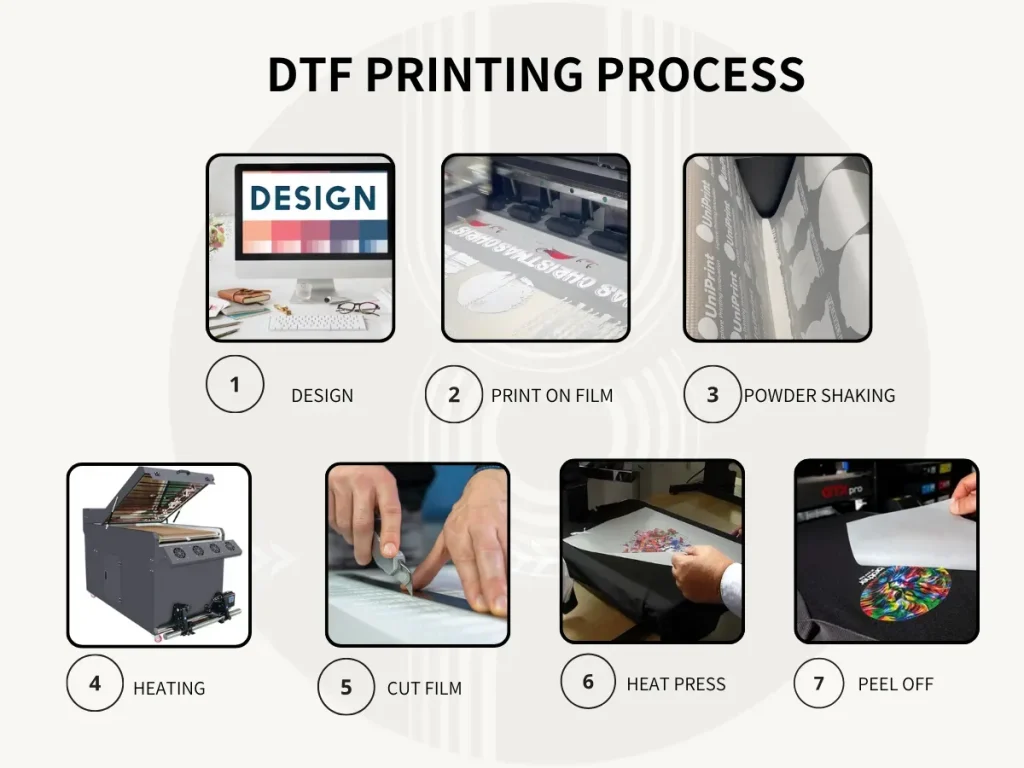
DTF printing has taken the apparel world by storm, offering a versatile, scalable way to decorate fabrics with vibrant designs. If you’re exploring ways to create custom apparel that stands out, Direct-to-Film is a technique worth understanding today. This introductory guide explains what the method is and how the process works, turning digital art into wearable art for brands and creators. You’ll learn about essential equipment and best practices to achieve consistent, high-quality results for a growing range of fabrics. From color management to finishing touches, this overview sets the stage for scalable, on-demand customization and reliable, repeatable results across batches.
Alternative phrasing for this approach describes a film-transfer workflow that prints onto a specialty sheet and then applies heat to transfer the design to fabric. From an LSI perspective, search terms like pigment ink transfers, white underbase, adhesive powder, and color-reliable substrates for DTF often appear alongside discussions of garment decoration. Compared with DTG or vinyl transfers, the film-based method emphasizes durability on a broader range of fabrics and simpler setup for small runs. By framing the topic in these related terms, readers can connect concepts across printers, films, and presses while planning scalable production.
DTF Printing Essentials: From Concept to Fabric
DTF printing, or Direct-to-Film transfers, offers a flexible path from digital design to wearable art. In a typical DTF workflow, a design is printed onto a transparent DTF film using pigment inks, often with white ink as an underbase, then coated with adhesive powder and cured. After curing, the powder-coated film is pressed onto cotton, blends, or synthetics with heat to fuse the design. This end-to-end process provides vibrant color reproduction, durable adhesion, and a soft hand that is well-suited to small runs and on-demand production.
Because DTF printing uses a film-based transfer, shops can easily switch designs without changing screens or screens; the approach scales from single-item prototyping to multi-item launches. Understanding the Direct-to-Film concept helps operators select compatible printers, films, and powders, and plan color management and workflow steps that minimize waste and improve yields.
DTF vs DTG: Choosing the Right Path for Your Custom Apparel
When deciding between DTF printing and Direct-to-Garment (DTG), several factors matter. DTF generally offers stronger substrate versatility, as the film-based transfer can adhere to cotton, blends, polyester, and some synthetics with reliable color fidelity. DTG shines on 100% cotton fabrics with deep ink embedding, but may require pretreatment and can be less color-stable on darker fabrics. Overall, the cost per piece, setup complexity, and durability are common tradeoffs to weigh when evaluating DTF vs DTG.
For shops focused on multi-color designs, textured textures, and varied substrates, DTF for custom apparel presents a practical path to quick turnarounds and consistent results; many brands blend DTG for delicate items and DTF for complicated substrates where DTG performance wanes.
Substrates for DTF: Fabric Choices and Performance
DTF printing works across a broad range of fabrics, but some materials respond better than others. Cotton and cotton blends typically deliver vivid color and robust adhesion, while polyester and poly blends can require more attention to white underbase opacity and potential dye migration. Nylon and performance fabrics can be transferred onto, but thorough substrate testing is advised to confirm color fidelity and durability.
Dark versus light fabrics also influence outcomes. White underbase is often necessary for dark fabrics to achieve bright, even color payoff, while on light fabrics the underbase can be minimized for faster production. By testing substrates and calibrating color profiles, you can optimize the DTF transfer for each fabric type and maintain consistency across production runs.
DTF Printing Process: Step-by-Step Workflow for Consistent Results
A robust DTF printing process begins with design and color management. Prepare artwork at high resolution and ensure color profiles align with your printer’s gamut. Print onto the DTF film with the white underbase first (on many workflows), then print the color layers. After printing, apply a translucent adhesive powder evenly and cure the film to fix the powder before transfer.
Next comes transfer: align the powder-coated film on the garment and press with accurate temperature, dwell time, and pressure for the fabric type. Peel the film when cool, and consider a post-press step to improve durability. Maintaining consistent transfer parameters, using compatible inks and films, and performing test prints help ensure reproducible results across batches.
Color, White Ink, and Opacity: Mastering DTF Underbases
In DTF, white ink is a critical ally because it provides opacity on dark fabrics and controls brightness on colored substrates. An effective white underbase enables vivid color reproduction and reduces color bleeding. The strength and placement of the base must be calibrated for each design to prevent haloing and maintain color fidelity.
Color management goes beyond white; calibrating printer profiles, matching film and powder, and performing swatch tests for common substrates help maintain consistent hue across runs. On light fabrics, you may still benefit from a light white underbase for sharp edges and crisp color, while on dark fabrics, the base level must be carefully tuned to avoid over-saturation.
Maintenance, Troubleshooting, and Quality Control for DTF Success
Keeping a DTF operation reliable requires routine printer maintenance, film handling discipline, and careful powder management. Regularly clean print heads, flush ink lines per manufacturer guidance, and store films in a cool, dry place to avoid dust and fingerprints on the transfer surface. A defined SOP helps scale operations without sacrificing quality.
Common issues—adhesion problems, white layer bleeding, or mottling—often trace to substrate fit, curing time, or imperfect color management. Use diagnostic test prints, verify transfer parameters, and adjust white base strength or temperature as needed. A simple QC checklist at both pre-production and post-press stages helps ensure durable, high-quality results for your DTF printing process.
Frequently Asked Questions
What is DTF printing and how does the Direct-to-Film process work?
DTF printing is a transfer method that prints the design onto a transparent DTF film using pigment inks (often including white ink) and then applies an adhesive powder. The film is cured and pressed onto a fabric with a heat press, transferring the design. The typical DTF printing process includes design prep, film printing, powder coating, curing, transfer, and peeling.
DTF vs DTG: how do they compare for custom apparel in terms of color, durability, and substrate options?
DTF generally offers lower setup costs for multi-color designs and works on a wider range of substrates, including blends and synthetics, with a soft hand and strong wash durability. DTG delivers excellent color on light fabrics by embedding dye directly into cotton, but substrate compatibility is more limited. For projects with dark fabrics or diverse substrates, DTF can be a more versatile choice for custom apparel.
What substrates for DTF printing are best for custom apparel, and are there fabrics to avoid?
Substrates for DTF printing work well on cotton and cotton blends, as well as many poly fabrics and some nylon materials. White underbase often helps on dark fabrics to ensure color density. Always test substrate compatibility and dye migration to avoid adhesion or color issues.
DTF printing process: what should I know about design preparation and color management?
In the DTF printing process, start with high-resolution artwork (preferably 300 dpi at final print size) and color manage for your printer’s gamut. Use a white underbase for dark fabrics to maximize vibrancy, and ensure film, inks, and adhesive are compatible. Run test prints to calibrate colors before full production.
What are common DTF printing issues and how can I troubleshoot them?
Common issues include peeling or poor adhesion, visible white underbase, cracking, mottling, and transfer residue on fabric. Troubleshoot by verifying film quality, ensuring proper powder curing, adjusting transfer temperature and pressure, confirming substrate compatibility, and performing test runs to refine color profiles.
DTF for custom apparel: how does it fit small runs and on-demand production compared to other methods?
DTF for custom apparel is well suited to small runs and on-demand production due to lower setup costs, faster turnaround for multi-color designs, and broad substrate compatibility. It offers flexibility for diverse product lines, though the powder-coating and transfer steps require optimized workflow to maximize throughput.
| Key Area | Summary |
|---|---|
| What is DTF printing? | DTF printing is a versatile method to decorate fabrics with vibrant, durable designs. It supports small runs and on-demand production by transferring art via a pigmented ink print on a special film, coated with adhesive powder, cured, and pressed onto textiles, usually cotton, blends, or synthetics. |
| How DTF printing works | A multi-step workflow: design with color management; print on DTF film (often with a white underbase); apply adhesive powder; cure the powder; transfer with a heat press; peel and finish. Protective sheets are often used during pressing. |
| Core materials & equipment | Printer with pigment inks and white ink capability; transparent DTF film (PET); white and color inks; adhesive powder; curing/fixation method; heat press (swing-away or clamshell); post-press tools like Teflon sheets and parchment. |
| Substrates & color considerations | Cotton and blends are straightforward; polyester blends can work with attention to white base opacity; nylon and performance fabrics require substrate testing. Dark fabrics typically need a white underbase; color management requires calibration and test prints to ensure consistency. |
| DTF vs DTG & other transfers | DTF often offers lower setup costs for multi-color designs and better substrate versatility; prints are usually soft and durable. DTG excels on light fabrics but may be heavier; HTV can be stiffer. Turnaround is fast for both DTF and DTG, with powder coating adding a distinct step in DTF. |
| Design & workflow best practices | High-resolution design (≥300 dpi); color profiling for your printer/film; plan white underbase for dark fabrics; ensure ink/film compatibility; allow drying and proper curing; use tested transfer settings; post-transfer cooling and care. |
| Troubleshooting common issues | Peeling/adhesion problems: check film, powder, cure, temperature, fabric. White layer issues: calibrate underbase; moisture can affect results. Cracking: adjust press/curing. Mottling: test color profiles. Residue: refine curing. |
| Maintenance & workflow | Regular printer maintenance (heads, nozzles, inks); store films dry and clean; manage powder with ventilation; clean heat platen; implement QC checks. |
| Cost & ROI | Consider ink, powder, film, and adhesive costs; amortize equipment; potential for automation; ROI improves with on-demand, multi-color orders and diverse substrates. |
| Practical starting tips | Start small with a tested catalog; build a color library; document SOPs; map a clear workflow with QC checkpoints; educate customers on care. |
| Real-world considerations | Assess target fabrics, order volumes, and color complexity. DTF provides a balanced option for versatile, high-color designs across fabrics; consider DTG or other transfers as complementary tools depending on project needs. |
Summary
DTF printing is a versatile, scalable method for creating custom apparel with vibrant, durable designs that stay true wash after wash. By mastering the core workflow—printing on DTF film, applying adhesive powder, curing, and heat transferring—you can achieve high color fidelity across cotton, blends, and synthetics. With careful substrate testing, consistent color management, reliable equipment, and a disciplined maintenance routine, a small business can efficiently deliver on-demand, multi-color designs that stand out in a competitive market. DTF printing thus offers a robust pathway to creativity, efficiency, and growth for custom apparel ventures.