
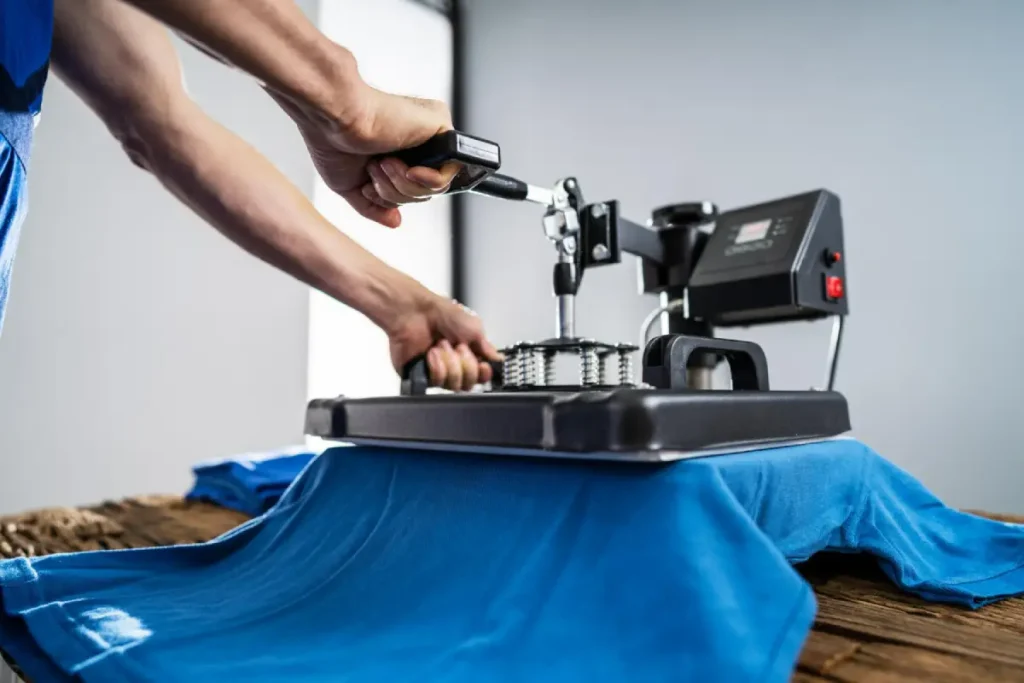
The transition from a manual print operation to an apparel manufacturing hub is a journey of technical maturation. Many shop owners view their dtf equipment as a simple output device, but true brand leaders treat their entire production line as a calibrated system. If your goal is to exit the “low-margin” trap and compete in the premium retail space, you must move beyond generic settings and begin optimizing your output for specific textile architectures.
The “soft-hand” feel that luxury shoppers expect isn’t an accident; it is the result of precise heat transfer dynamics. Professional-grade dtf transfers require a symbiotic relationship between the adhesive, the ink density, and the fiber weave of the garment. At Harwin, we believe that the difference between an average shop and an elite apparel brand is the transition from “operator intuition” to “data-driven production governance.”
The Physics of Fiber Integration
Most print failures—cracking, peeling, or fading—occur at the interface of the ink and the textile fiber. When you press a transfer, you are not just applying heat; you are initiating a transition where the TPU adhesive must penetrate the fabric weave to create a mechanical lock. If your pressure is uneven, or if the fabric contains residual moisture, this lock never occurs.
To master this, you must treat every textile type as a distinct engineering challenge:
- Moisture Displacement: Always pre-press your garments to evaporate residual moisture. If you don’t, that moisture becomes steam during the transfer process, creating a physical barrier between your print and the fabric fibers.
- Pressure Distribution: A print is only as strong as its weakest edge. Ensure your press is perfectly level and consider using a high-density rubber mat to guarantee even PSI across the entire graphic surface.
- Cooling Cycle Governance: The “cool-peel” is the most important step for internalizing the bond. This period of transition from liquid to solid adhesive is what “locks” the graphic into the textile structure.
The Competitive Edge of Operational Agility
In the digital age, speed is a form of currency. When you search for dtf transfers near me, don’t look for the lowest price; look for the most technically capable partner. A high-performance regional printer can help you bypass the massive lead times of national suppliers, effectively allowing you to run your business with near-zero physical inventory. This is the “Lean Manufacturing” model that keeps your capital flowing into growth, not into boxes of unsold shirts in your warehouse.
Building a deep relationship with a technical printing partner also unlocks R&D capabilities. Whether it is testing a new matte finish to follow luxury streetwear trends or developing a low-temp adhesive for high-end synthetic blends, this partnership allows your brand to pivot instantly. Harwin encourages this strategic alignment—it’s how you remain responsive to market shifts without needing to manage industrial-scale printing hardware yourself.
Establishing Institutional Quality Governance
Scalability dies where guesswork lives. If your quality depends on the memory of one operator, your production is capped. To break through, you must document your “Technical Production Matrix.” This ledger should be a shared asset for your team, containing the specific thermal profiles and PSI requirements for every garment SKU in your portfolio. When your quality becomes a documented process, your production volume can scale without a degradation in product performance.
Furthermore, internal durability testing is your strongest marketing asset. By putting your products through extreme, industrial-grade wash cycles and documenting the results, you gain the empirical proof necessary to offer a genuine “Retail-Grade Durability” guarantee. This builds a level of trust that transforms a first-time buyer into a lifelong advocate for your brand. When your reputation is backed by test data, your ability to command higher prices becomes a natural consequence of your excellence.
Frequently Asked Questions
Why does inconsistent pressure cause “peeling” at the graphic edges?
Edges are the most vulnerable part of any print. If your press platen has “deflection” (a slight bending under pressure), the outer edges receive less force than the center. This causes the adhesive to fail at the perimeter first. Always center your designs and check your press for levelness.
How do I differentiate high-end transfers from mass-market ones?
It’s all about the “elastic recovery.” A premium transfer will stretch with the garment and snap back to its original shape without creating white stress marks or micro-tears. If a print shows “whitening” after one stretch, it’s a sign that the adhesive formulation is too rigid for long-term wear.
What is the most effective way to protect delicate, heat-sensitive fabrics?
Use a “Thermal Buffer” approach. Place a silicone mat between the garment and the press. This slows down the rate of energy transfer, allowing the adhesive to melt without the fabric surface hitting its scorching point. It’s a simple layer of protection that saves high-end inventory from thermal damage.
How can I optimize my ink density for a softer print feel?
Modern RIP (Raster Image Processor) software allows you to control the white-base layer independently. By reducing your white ink percentage for light-colored fabrics, you can significantly reduce the weight of the print, resulting in a more breathable and comfortable retail-grade product.
Building a successful, high-quality apparel brand is a journey of continuous technical refinement. By mastering the potential of dtf, you position your brand to compete at the highest level of the custom merchandise market. Harwin is committed to providing the industry insights you need to turn your production floor into a professional, profitable enterprise. Start optimizing your workflow today—your commitment to quality is the most valuable investment you can make for your brand’s future.